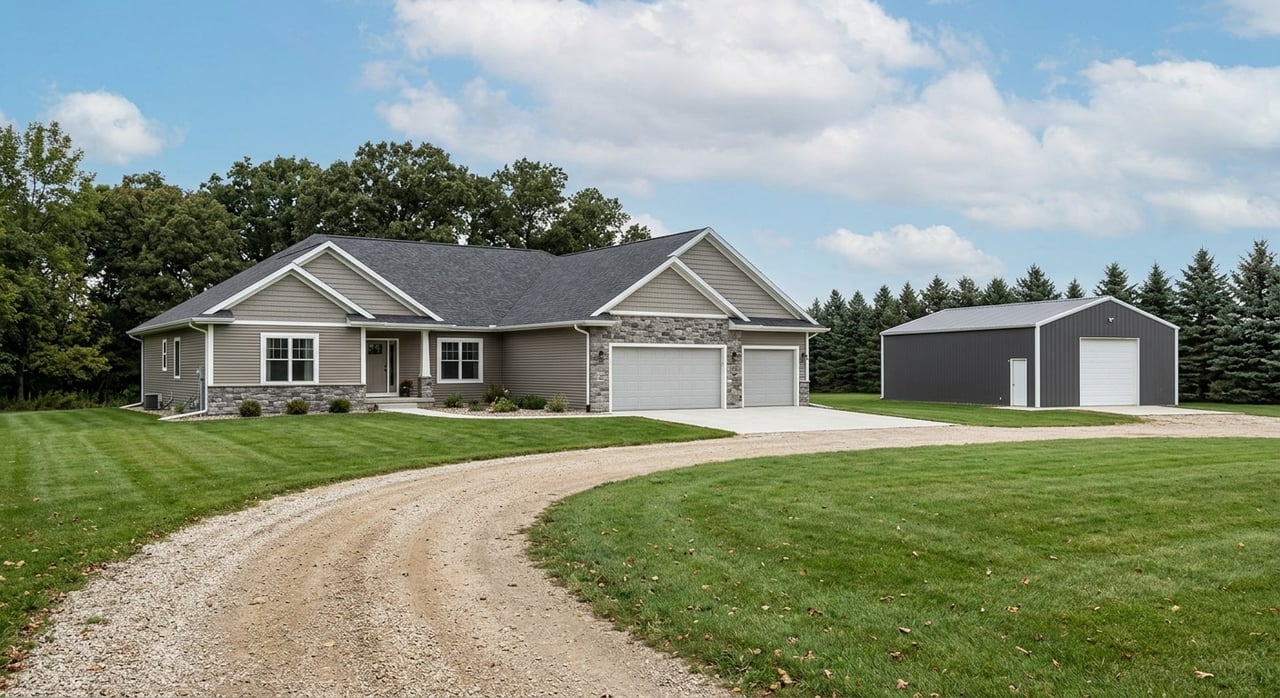
Dreaming about a little more space near Adel? Acreage living can be a great fit if you want room to spread out, add a shop, keep a hobby setup, or simply enjoy a quieter setting. But buying rural property is different from buying in a typical neighborhood, and the details that matter most are often the ones you cannot see at first glance. This guide walks you through the biggest things to watch for before you buy an acreage near Adel, so you can move forward with more confidence. Let’s dive in.
Start With Zoning
When you buy an acreage near Adel, the first question is not just how many acres you are getting. It is also how the property is zoned and what that zoning allows you to do.
In unincorporated Dallas County, zoning is managed by Dallas County Planning & Development. Two districts often matter most for acreage buyers: A-1 Agricultural and RE-1 Suburban Estate. Each one comes with different rules for lot size, uses, and building limits.
A-1 Agricultural rules
The A-1 Agricultural District is meant to preserve agricultural land and limit urban encroachment. It allows agriculture, usual farm structures, certain agricultural operations, and single-family dwellings, including some manufactured homes if they are permanently installed and converted to real property.
For dwellings in A-1, the minimum lot area is 10 acres, the minimum lot width is 150 feet, and accessory nonagricultural buildings need 15-foot side and rear setbacks. The ordinance also limits the district to one dwelling per tract of record as of July 22, 2004. If you are picturing multiple homes or a flexible future split, this is a detail you will want to confirm early.
RE-1 Suburban Estate rules
The RE-1 Suburban Estate District is Dallas County’s large-lot residential option. Depending on water and sewer availability, minimum lot size can range from 20,000 square feet to 2 acres, with some situations allowing 1.5 acres or even 1 acre if supported by an approved concept plan and soil engineering study.
Agricultural uses are allowed in RE-1, but livestock and poultry generally are not. Private stables are permitted, but they must be set back at least 200 feet from property boundary lines. That can make a big difference in how usable your lot feels once barns, fencing, and riding space are mapped out.
Conditional uses can affect your plans
If your intended use does not fit the base zoning district, Dallas County may require a conditional use permit and additional infrastructure or road review under the zoning code. That matters if you are hoping for a nonstandard rural use, a larger outbuilding, or a more intensive activity than the district normally allows.
In short, do not assume that “acreage” means total freedom. Before you write an offer, make sure the property supports the way you actually plan to live on it.
Look Closely at Well and Septic
One of the biggest differences between town living and acreage living is that water and wastewater systems are often private. That means they are not just part of the property. They are also part of your long-term maintenance responsibility.
Dallas County Environmental Health handles private septic permits and inspections, private well permits and inspections, and well testing services. For many acreage buyers, this is where hidden costs show up.
Septic inspections matter before closing
In Iowa, the DNR says every septic system serving a home or building must be inspected before sale or deed transfer unless a legal exemption applies. According to the Iowa DNR septic transfer guidance, the inspection report must be submitted to county environmental health and the DNR, and a copy must be attached to the Groundwater Hazard Statement before the deed can transfer.
If the septic system is found to be inadequate, the seller can repair it before closing or the parties can negotiate a binding acknowledgment for later correction. Either way, the condition of the system can directly affect your timeline, your costs, and your negotiations.
Septic upgrades need permits
Dallas County’s onsite wastewater rules state that you cannot begin construction, repair, replacement, or alteration of a septic system without a permit. A design from a system design engineer is required, the county sanitarian performs a site evaluation, and the permit is valid for up to one year.
The county’s building permit process also requires a septic permit before a dwelling permit is issued. Septic permits may also be required when you add bedrooms, change occupancy, or connect to an existing system. So if you are buying with plans to remodel or expand, septic is not just a closing issue. It is a future planning issue too.
Well responsibility transfers with ownership
Private wells deserve just as much attention. The Iowa DNR requires a private well construction permit for water supply wells, and counties issue permits for private water supply wells.
The DNR also notes that responsibility for wells transfers with the property title, even if the buyer did not know a well existed. Under the DNR’s guidance on abandoned wells and plugging, all water supply wells must be disclosed on the Groundwater Hazard Statement, and abandoned wells should be properly plugged to reduce contamination and safety risks.
Budget beyond the purchase price
With an acreage, it is smart to budget for more than the mortgage and closing costs. Water tests, septic inspection fees, possible repairs, and the chance that an older system may need work can all become part of the real cost of ownership.
Confirm Legal and Practical Access
Acreage buyers sometimes focus so much on the house and land that they overlook access. Near Adel, access is not just about whether a driveway exists. It is also about whether the access is approved, safe, and workable for your future plans.
Dallas County says property owners are responsible for entrances into fields, homes, and businesses, and an access permit is required before construction. The county road superintendent must meet on-site with the applicant to evaluate sight distance and construction standards.
Driveway location can affect permits
The county’s building permit application process requires an approved entrance permit for new entrances to county roads and for modifications to existing entrances. It also requires a scaled site plan that shows property lines and setback distances to property lines or right-of-way lines.
That means driveway placement is more than a cosmetic choice. It can shape where you build, how you orient a home or shop, and how long the permitting process takes.
Easements can limit usable land
If a stream or major surface water course is involved, Dallas County subdivision regulations may require easements along each side of the stream of at least 30 feet. Easements can affect where you place structures, fences, or other improvements.
This is one reason acreage buyers should review recorded documents carefully. A parcel may look wide open on a listing photo, but recorded easements can reduce the space you can truly use.
Check Floodplain and Drainage
Land near creeks, low ground, or river corridors can be appealing, but it also deserves extra review. Floodplain and drainage details can affect both current usability and future costs.
Dallas County’s floodplain management page explains that the ordinance is intended to reduce flood losses, protect buyers from land unsuited to intended use, and preserve eligibility for flood insurance. The county maintains current FIRM maps and encourages residents to use those maps when evaluating flood hazard areas.
Drainage districts can add recurring costs
Dallas County also has more than 60 active drainage districts. Landowners in a drainage district, not the county, pay for maintenance and repairs, and assessments are based on the benefit to the land.
If assessments are not paid, they become a lien on the property. For a buyer, that makes drainage district status more than a technical detail. It can affect your annual carrying costs and the long-term economics of the property.
Maps are helpful, but not final
The county’s interactive mapping tools are very useful for initial parcel research. But Dallas County also states that these maps are compiled from official records and should not replace original recorded documents for legal or survey questions.
That is a good reminder to treat online mapping as a starting point, not the final answer. If boundaries, easements, or legal access are important to your decision, recorded documents and professional guidance matter.
Plan for Buildings and Improvements
A lot of buyers picture the acreage lifestyle with a future shop, barn, stable, pool, or solar setup. Those improvements may be possible, but you will want to understand permit rules and setback limits before you count on them.
Dallas County’s building permit process requires permits for buildings and structures, including pools and ground-mounted solar. The county requires a completed application, a scaled site plan, and the right permit materials, and work cannot begin until the permit is issued.
Accessory buildings need planning
For accessory buildings, Dallas County asks for an accessory building information sheet. For post-frame construction, the county also requires stamped or engineered plans through its permit application process.
If your dream property includes a large shop or pole barn, this is worth reviewing before you buy. It is much better to know upfront whether your building plans fit the site and the zoning.
Setbacks can change your layout
Setback rules also matter. In A-1, accessory nonagricultural buildings need 15-foot side and rear setbacks under the zoning ordinance. In RE-1, a private stable must be at least 200 feet from the property boundary.
Those distances may sound manageable until you factor in driveways, septic areas, wells, easements, slopes, and the house itself. On acreage, the usable building envelope can be smaller than buyers expect.
Understand Ongoing Maintenance Costs
Acreage ownership often comes with extra freedom, but it also comes with extra responsibility. Some of the biggest surprises are not at closing. They show up in the first year of ownership.
Dallas County’s maintenance division handles road maintenance, snow and ice control, drainage tile repair, ditch cleaning, signing, and bridge and culvert repair on county systems. But entrances remain the property owner’s responsibility.
Rural upkeep goes beyond mowing
Your true cost of ownership may include driveway upkeep, culvert work, snow removal, and general maintenance tied to a larger lot. If the property has outbuildings, fencing, or long access drives, those costs can add up faster than many buyers expect.
Weed control can also matter. Dallas County’s Weed Commissioner enforces the Iowa Noxious Weed Law on private and public land, including farmland, so acreage owners need to stay on top of required control.
A Simple Acreage Buying Checklist
Before you buy an acreage near Adel, it helps to slow down and verify the basics. A few extra questions early can save you time, money, and stress later.
Here is a practical checklist to keep in mind:
- Confirm the zoning district and allowed uses
- Review lot size, setbacks, and any recorded conditions
- Ask about septic inspection status and possible repairs
- Verify well location, condition, and disclosure history
- Check access permits and driveway approval
- Review floodplain maps and drainage district status
- Look for stream easements or other recorded restrictions
- Confirm permit requirements for future shops, barns, pools, or solar
- Budget for ongoing rural maintenance costs
Buying an acreage near Adel can be a fantastic move if the property fits both your lifestyle and the rules that come with it. The key is doing enough homework before closing so you know exactly what you are buying and what ownership will really look like.
If you want help sorting through acreage options, permit questions, or property red flags before you make an offer, connect with Adam Bugbee. You will get practical guidance, responsive communication, and local support that helps make a more complex purchase feel much more manageable.
FAQs
What zoning should you check before buying an acreage near Adel?
- You should confirm whether the property is in Dallas County’s A-1 Agricultural district, RE-1 Suburban Estate district, or another zoning classification, because allowed uses, lot size minimums, and setbacks can vary.
What septic rules apply when buying an acreage in Dallas County?
- Iowa requires septic inspection before sale or deed transfer unless an exemption applies, and Dallas County requires permits for septic construction, repair, replacement, and some changes in use or bedroom count.
What should you know about private wells on acreage properties near Adel?
- Private well responsibility transfers with the property title, wells must be disclosed on the Groundwater Hazard Statement, and abandoned wells should be properly plugged to reduce contamination and safety risks.
Why does driveway access matter for acreage property near Adel?
- Dallas County requires access permits for entrances, and driveway location can affect sight distance, permit approval, site design, and how you place future buildings.
How do floodplain and drainage districts affect acreage ownership in Dallas County?
- Floodplain location can affect land use and flood insurance considerations, while drainage district assessments can create ongoing ownership costs and may become a lien if unpaid.
Can you build a shop or barn on an acreage near Adel?
- Possibly, but you should verify zoning, setbacks, permit requirements, and site constraints like septic areas, easements, and access before assuming your planned building will work.