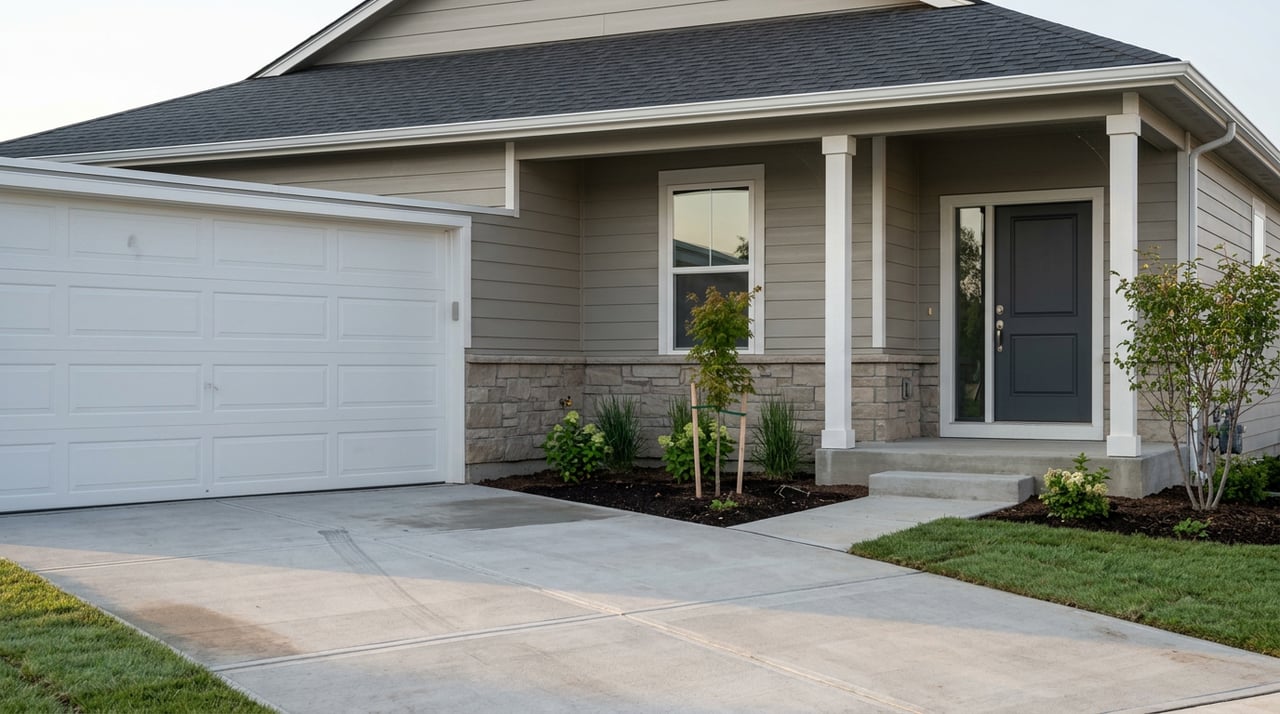
Picture a buyer who signs on a to-be-built home in one of Waukee's newer communities this summer. The lender quotes a monthly payment built on a property tax estimate pulled from the builder's paperwork. The buyer moves in, pays that number for a year, feels good about the math, and then a notice arrives that changes everything. The tax line was never wrong on paper. It was measuring a house that did not exist yet.
That gap between what a new-construction buyer is quoted at closing and what they eventually owe is not a clerical error. It is built into how Iowa assesses property, and it shows up more often in a city adding this many homes this fast.
The Snapshot Date That Decides Your First Bill
Iowa assessors work off a single moment in time. Every county assessor's office, including Dallas County's, determines a property's value as it exists on January 1 of the assessment year, which Iowa Code section 441.46 sets as the assessment date, and for a home still under construction, the assessor determines either a full or partial value depending on its state of completion on that date. Close on a spec home in March or a to-be-built home in October, and the tax value your lender used to build your escrow account may have been set months earlier, based on a foundation, a frame, or a lot that had not yet turned into the house you're living in.
This is not unique to Iowa. Tax and mortgage professionals describe the same pattern nationally: in states that use a fixed lien date, your first-year bill reflects land only, then the improvement value lands and the bill jumps. What makes Waukee worth a closer look is how long that gap stretches once Iowa's own notification rules get added on top.
The Twelve-to-Thirty-Month Lag Nobody Mentions at Closing
Once your home's completion pushes its assessed value up for a given January 1 snapshot, the county does not bill you right away. Dallas County's own guidance is specific about the sequence: you will receive an assessment notice on or before April 1st of the year of the change, but the taxes on the new assessment will not be reflected until September of the following year.
Lay that out on a calendar and the timeline looks like this for a home still being finished today:
| When | What Happens |
|---|---|
| January 1, 2026 | The state snapshot date. If your home is still framed or unfinished on this date, this is the value your county assessor uses, even if you close in the spring or summer of 2026. |
| By April 1, 2027 | If the home's completion raised its assessed value for the January 1, 2027 snapshot, the county mails a new assessment notice by this date. |
| September 2028 | The higher assessed value finally shows up in an actual tax installment, per the county's own timeline for when reassessments take effect in billing. |
A buyer who closes in early 2026 on a home that finishes later that year could easily go two and a half years before the real tax bill catches up to the real house. In the meantime, the escrow account is collecting based on the old, lower number, which can leave an escrow shortage.
Waukee Is Building Fast Enough That This Keeps Happening
This mechanic matters more here than in a slower-growing suburb simply because of volume. The City of Waukee issued 201 building permits in June 2026 alone, including 35 for single-family homes, and that is one month in an ongoing pattern. The city's own numbers show why: a special census completed in 2024 counted 31,823 residents, up from 23,940 in the 2020 U.S. Census, and officials project the population could reach 35,000 by 2030.
Growth on that scale is not confined to one corner of town. As of mid-2025, the Kettlestone corridor was already adding housing on top of retail and entertainment, with Kettlestone Lofts having opened and Kettlestone Townhomes under construction as part of a push to build out a second town center west of the historic Triangle district, and that pipeline has kept moving since. Subdivisions like Painted Woods West, Autumn Valley, Castle Ranch, and Spring Crest are currently selling spec and to-be-built homes from builders including D.R. Horton and Destination Homes. Any buyer signing in one of these active communities is a candidate for the January 1 timing mismatch, simply because so much of the current inventory is mid-build rather than sitting finished on a lot.
The Price Gap That Makes This Easy to Miss
There's a second wrinkle that compounds the timing issue. As of April 2026, Waukee's median home price sat at $391,990, while the broader Zillow home value index for the city, which folds in existing homes across all price points, showed $347,004 as of May 2026, down 1.9% year over year. That roughly $45,000 gap is not a sign of a market correction. It reflects the fact that new construction sales, which dominate current activity in Waukee, tend to price higher than the wider stock of existing homes.
Here is why that gap matters for the tax question. A buyer comparing a builder's advertised starting price against the "typical" Waukee home value is looking at two different populations of homes. The escrow estimate at closing is usually built off the builder's base price disclosure or an early land-based assessment, not the finished value the home will carry once it is fully built and compared against other new construction in its own subdivision. The number that feels affordable on day one is measuring a different house than the one the assessor will eventually price.
What to Ask Before You Sign
A few questions asked before closing can save a much larger conversation with your lender eighteen months later.
- Ask the builder or lender exactly what value the property tax escrow estimate is based on: land only, a percentage-complete figure, or the anticipated finished value.
- Ask when the home is expected to reach substantial completion relative to the January 1 assessment date. Finishing before or after that date determines which tax year absorbs the full value.
- Ask your lender to model your monthly payment at the fully assessed value, not just the opening estimate, so you know the ceiling and not only the starting point.
- Set aside a cushion for year two or three rather than treating the first tax bill as permanent.
- If you're buying resale in an already-established Waukee neighborhood instead, this specific mismatch mostly does not apply, since that home was already carried through a full assessment cycle.
If you're already under contract on a new build, this is worth raising with your closing team now rather than waiting for the notice to show up in the mail.
A Few Straight Answers
Does this only affect new construction, or resale homes too? It's almost entirely a new-construction issue. Resale homes are reassessed on the regular odd-numbered-year cycle and see incremental shifts, but nothing close to the jump created when a property moves from land value to full improvement value in a single cycle.
Can I contest my new assessment if it comes in higher than expected? Yes. Dallas County allows property owners to protest an assessment, with completed forms accepted from April 2nd through April 30th for review by the local Board of Review.
Does the state's rollback rate protect me from a big jump? Not really, and it's a common point of confusion. The 2026 residential rollback ratio is 47.43%, and, as the Iowa Department of Revenue explains, it exists to cap statewide taxable value growth at roughly 3% a year in aggregate. That statewide limit does not erase the local jump when one specific home moves from a partial, under-construction value to a full, finished value. The rollback smooths the state's overall number. It does not smooth your individual bill.
The Bottom Line
None of this means new construction in Waukee is a bad move. The city's growth is real, the inventory is active, and plenty of buyers land in homes that fit their budget for years. The point is narrower: the number on your closing disclosure is a snapshot of an unfinished house, and Iowa's own timeline means the real bill can take a while to arrive. Knowing that going in is the difference between a manageable adjustment and an unwelcome surprise in your mortgage statement.
If you're weighing a lot in Painted Woods West, Autumn Valley, or any of Waukee's other active communities, it's worth walking through the actual assessment timeline before you sign anything. Adam Bugbee works with new-construction buyers across the Des Moines metro and can help you read a builder's tax estimate for what it actually is before it becomes part of your monthly payment.
This article is general information, not legal, tax or financial advice. Consult a qualified professional about your situation.